by Dennis Wheeler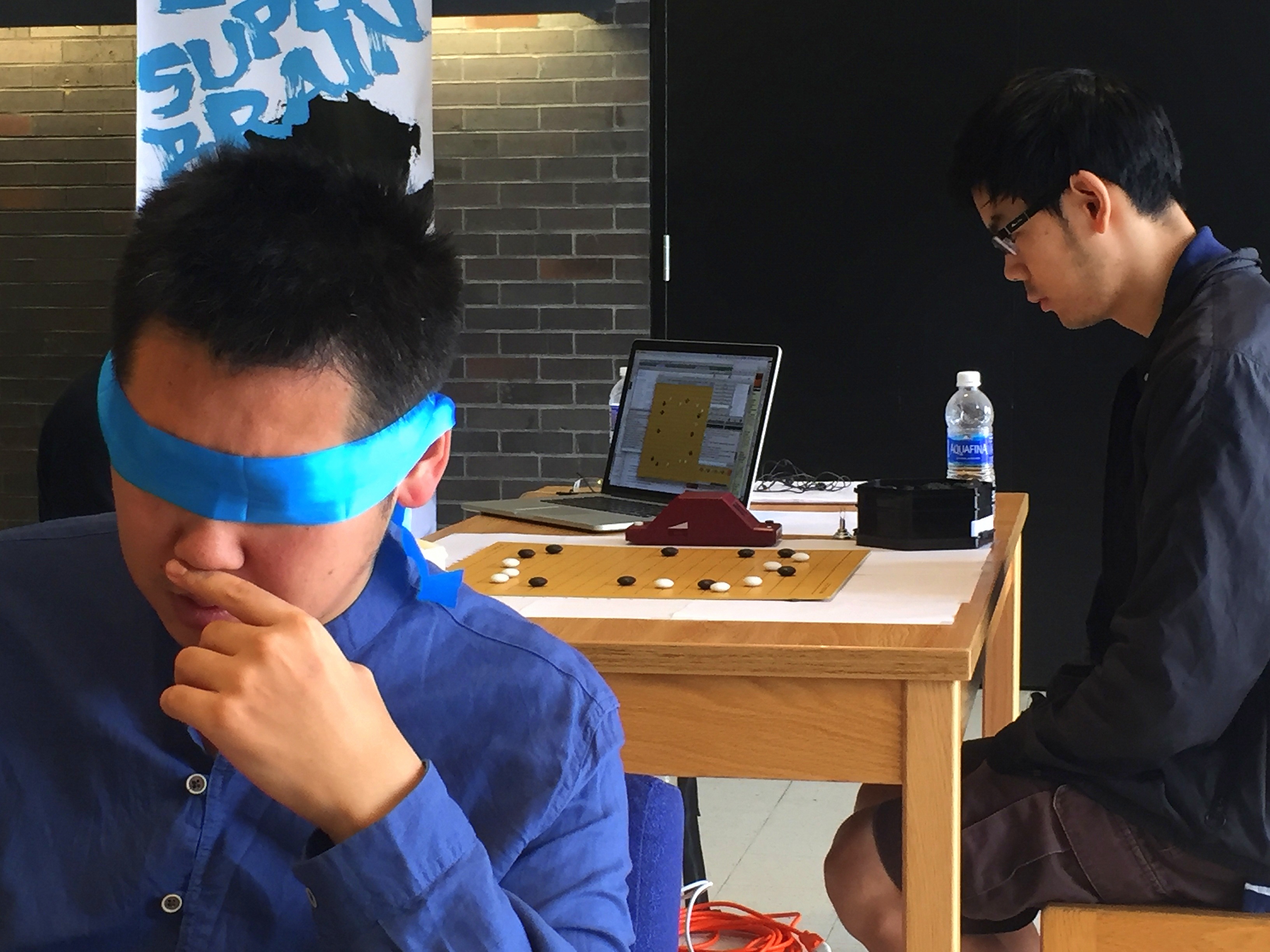
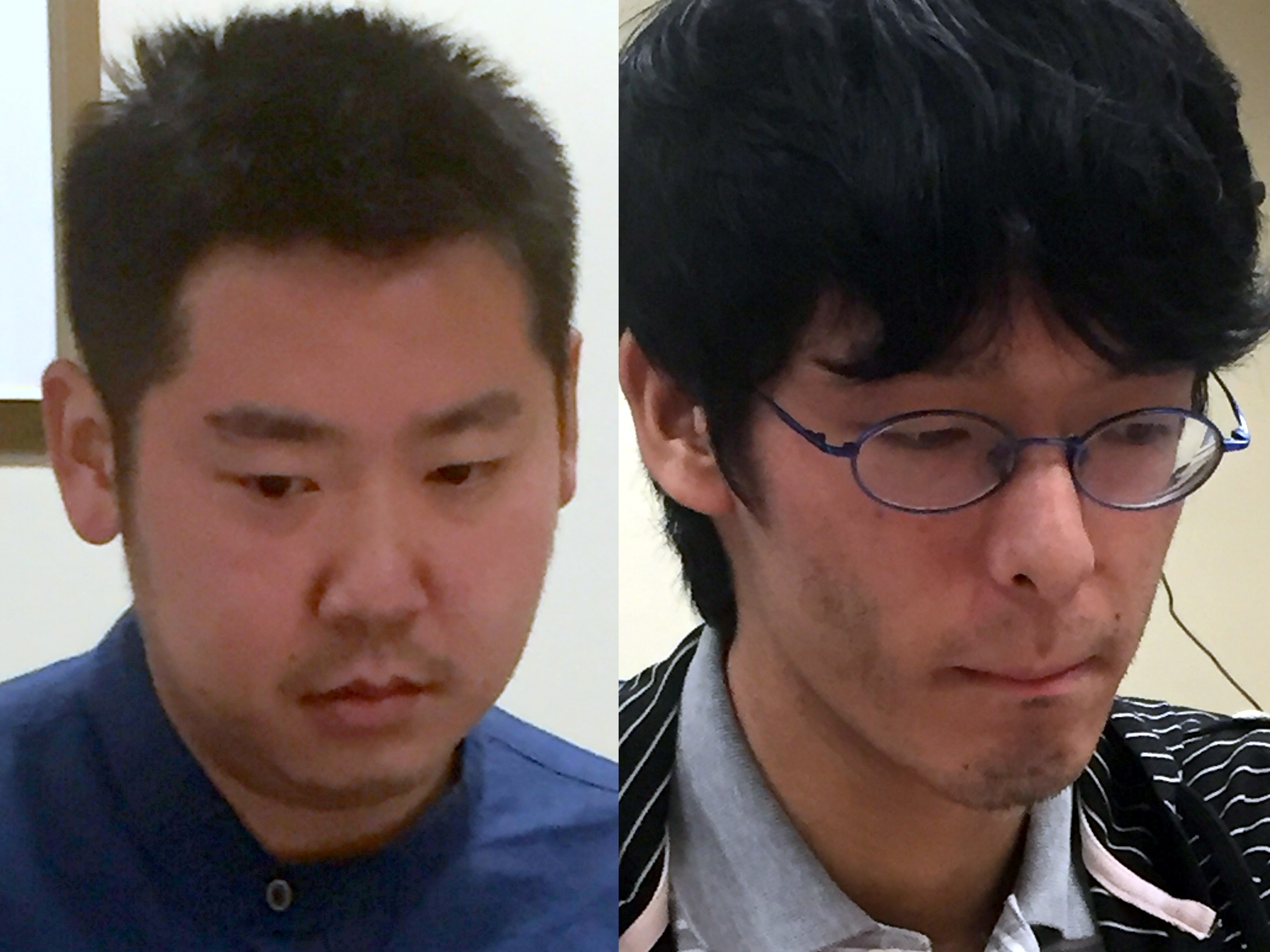
Monday was the usual non-stop super busy day for the E-Journal staff, with morning rounds from 9a-1p, evening rounds from 7p-11p and the usual “stuff as assigned” in between. For many years I’ve been one of the handful of top-board game recorders at the morning US Open Masters games, but this year we have a crew of five recorders, so I’ve been managing the recording team, which is great, but to be honest I was missing game recording. So when I was asked to be the game recorder for the Blind Go exhibition match Monday afternoon between Bao Yun 7d and Eric Lui 1p (apparently I have established a reputation for being good at it, especially after a Chinese article was published last year), I was both thrilled and honored. Bao Yun is famous for setting the world record for playing and winning five simultaneous games while blindfolded.
As experienced as I am at recording games, I’ve never had to call out the move coordinates to the players before. Turns out it’s not as easy as you might think. Game recording is easy — you just click the mouse in the same location that the players place a stone, but for this game I had to carefully check the coordinates, recheck to be sure and then check once more to be absolutely certain before calling them out so that Bao Yun, sitting next to me with a bright blue blindfold, could consider his move.
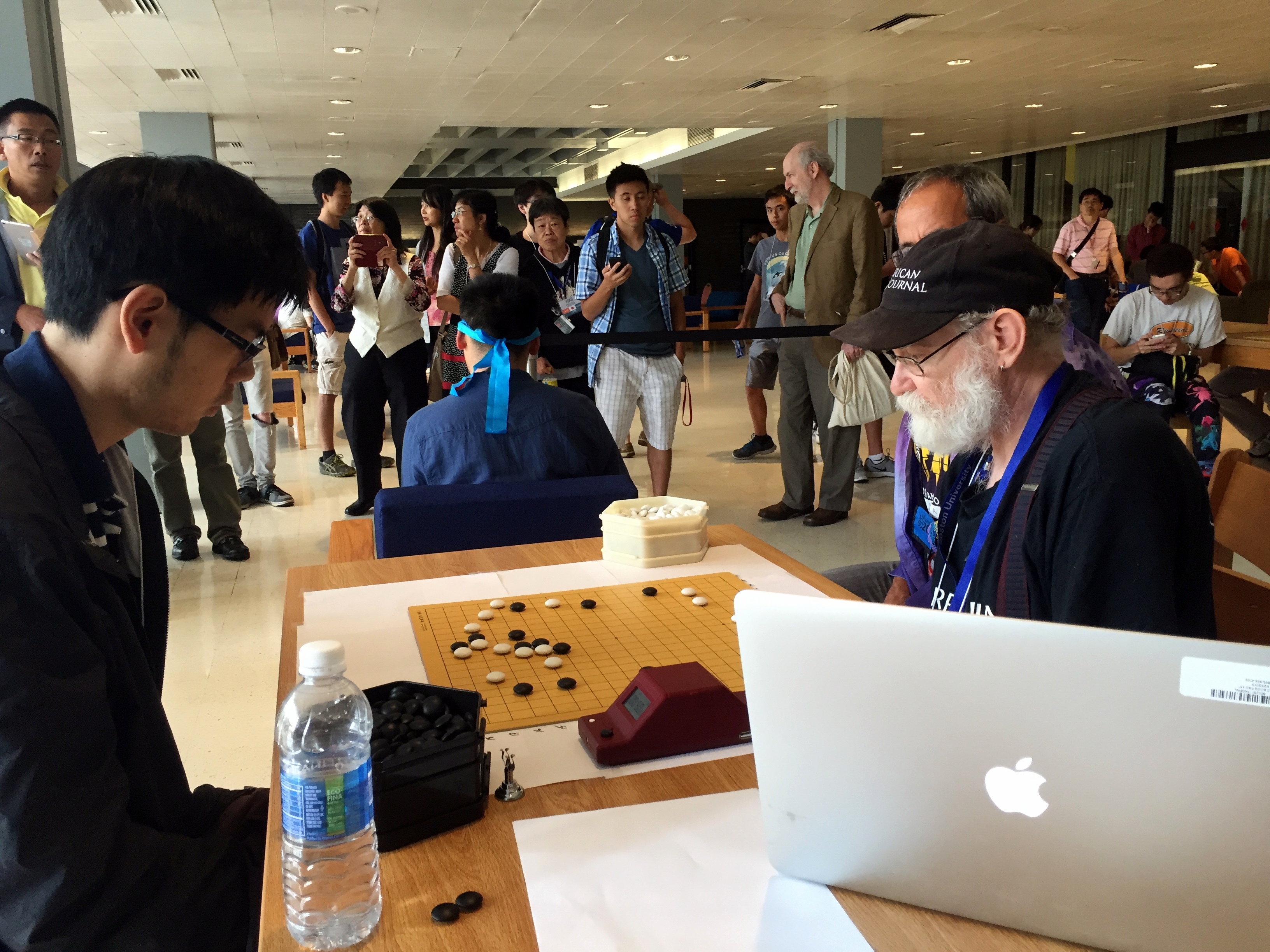 It felt to me like Eric Lui had a strategy in mind to try and trip up Bao Yun. It was quite impressive to be sitting at the same table with them both, Bao Yun blindfolded and with his back to us. He’d call out the coordinates of the move he wanted to play, and I’d place it on the board for Eric. Eric would play his move, and I’d call out the coordinates for Bao Yun. I also pressed the clock for Bao Yun and would occasionally call out the remaining time. Of course, the Ing clocks called out the time once we got into byo-yomi. Impressively, the game went all the way to counting, including filling all the dame.
I couldn’t begin to imagine how difficult it must be for Bao Yun to keep all those coordinates in his head for a full game, and I was especially worried about a “misclick” if I gave him the wrong coordinates, which I did once. Bao was of course expecting the actual move, so he adjusted easily enough after I said “oops.”
Mingjiu Jiang 7p was across the large open room giving a blow by blow commentary for a good size audience of Go Congress attendees, but far enough away that he was out of our earshot. In the end, Eric managed to win by a small margin. Though apparently we forgot to announce the ruleset to be used, which sparked a brief discussion as to the exact score, though the one point difference would not have changed the result. Black won by 5.5 by AGA counting. Click here to download the game record.
Special thanks to both Peter Armenia and Peter Gousios for helping relay and verifying the coordinates for my fading hearing in the loud open room.
– photos by Chris Garlock

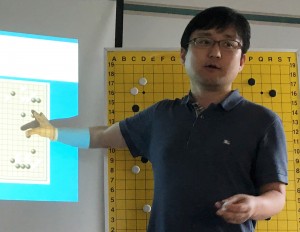 A highlight of the US Go Congress is the teacher training program. At Myungwan Kim 9p’s Tuesday afternoon lecture on teaching opening theory, Kim (right) said that one of the most important things players need to develop is evaluation, both global (whole board) and local (small area) evaluation. “If you are winning globally, or if you are weak locally, how should you play?” he asked the crowd attending the teaching seminar. “Defensive,” he told us after we shouted out a few answers. He also shared a mathematical approach to deciding between invading a territory or reducing it from the outside, in which the player calculates how many points he or she can let the opponent have and still win. If the opponent will make too many, invade. Otherwise, play from the outside. “That’s how you will find exactly how Lee Sedol will play,” explains Kim, “It’s not that difficult. But if you don’t have this type of theory, how can you find what he played? It’s way more difficult.” He also had something to say about losing stones. “The difference between sacrifice and giving up is whether you planned it or not,” he argued, getting a laugh from the crowd. Kim’s next teaching lecture is on Thursday, 8/4, at 1pm.
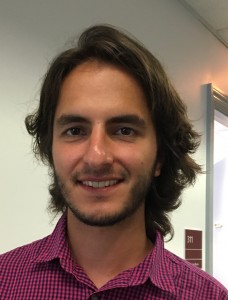 Antoine Fenech of Strasbourg, France, came to the US Go Congress specifically to exchange teaching ideas with American go clubs and for the seminars for go teachers. Kim’s Tuesday talk was Fenech’s first teaching lesson. “We don’t have this in Europe,” he said afterwards. Fenech (left) is a middle school math teacher who’s also a 5 dan go player. He runs programs in 10 primary schools in the city and teaches kids from 6-13 years old, a program started by his father in 1982, and responsible for training up many strong players. Fenech himself is a product of that program. “The most important thing is that the kids have fun” so that they come back, he said. Asked whether there’s a secret to teaching go he’d like to share with teachers in America, Fenech said that “We have a method to teach go very fast. In like five minutes, they can learn the real go game. And then after that, we don’t need to talk to them anymore, they can just play with each other. I have some kids who play every week and who just play together and I just taught them for five minutes the first day. If they’re already happy playing a lot with each other, then they don’t need someone to tell them more.” But that doesn’t mean the Strasbourg go program isn’t going to produce strong players. “I have some kids who want to improve, who want to play with me,” Fenech explains. “The new generation, we hope that some of them will become stronger, become the best French players.” The Strasbourg go club also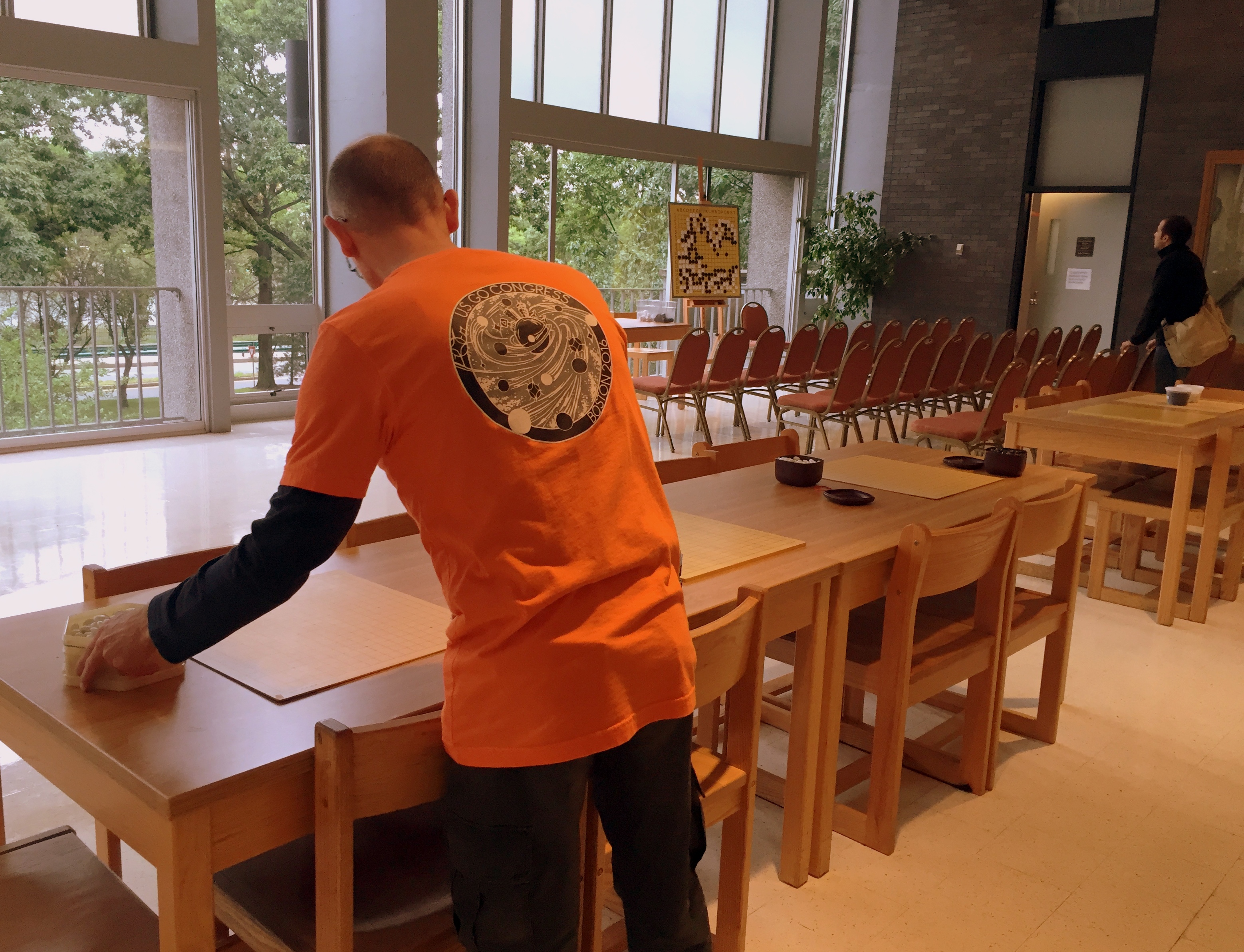
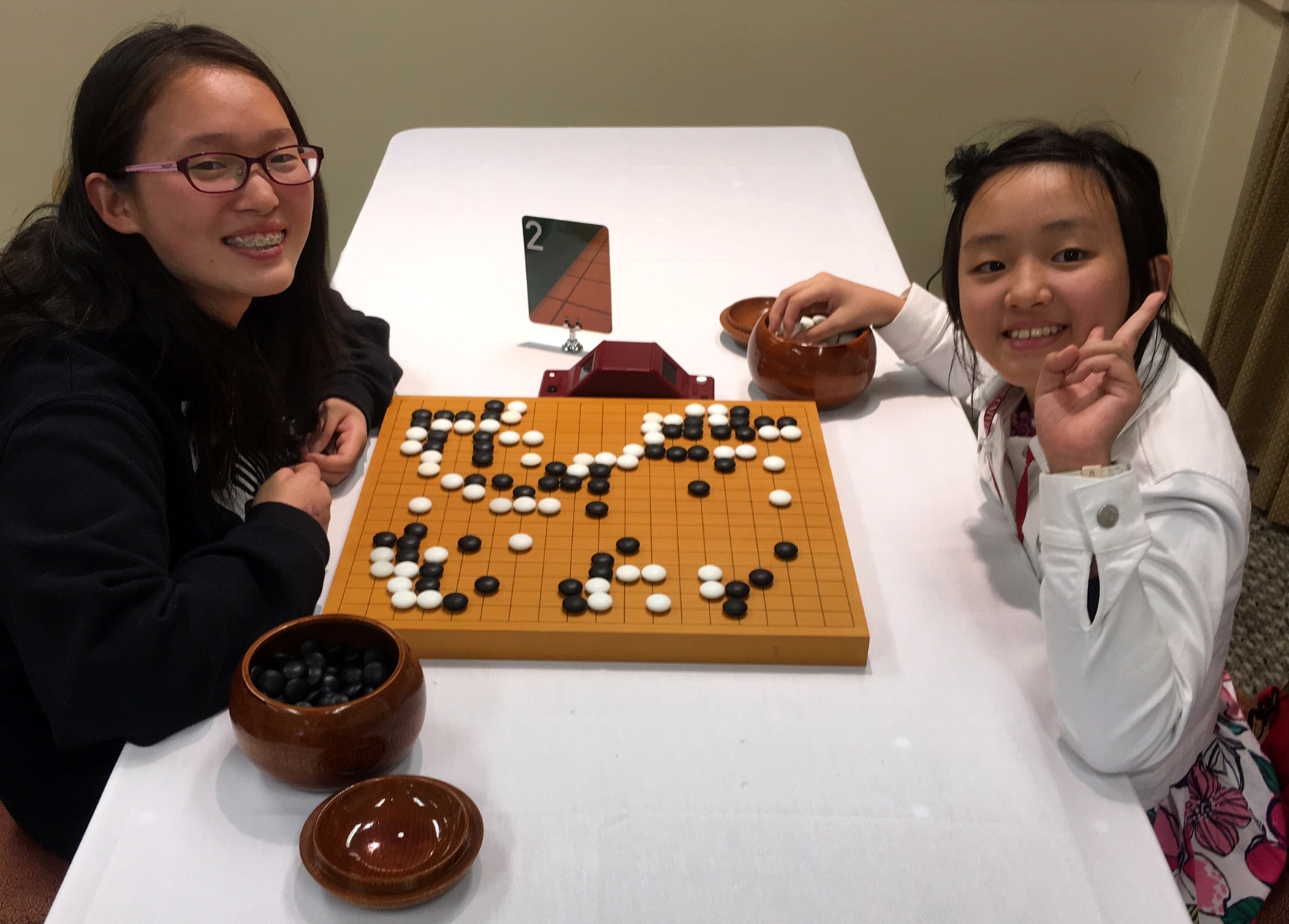
 Nqua Xiong 1k
 Alister Hake 12k